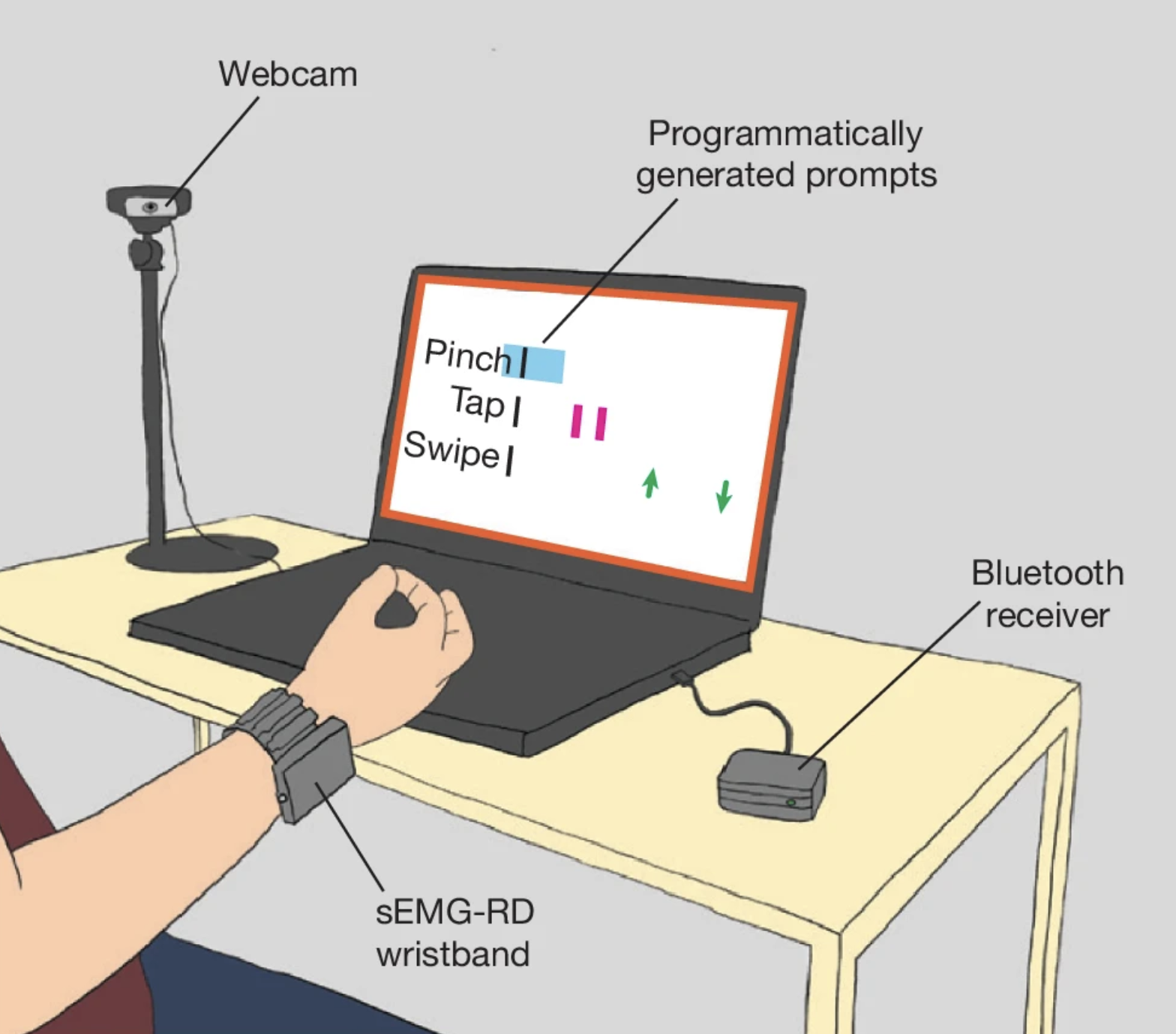
I led sensor fusion, gesture algorithm development, evaluation, and iterative improvement of two continuous control gestures for MRBD. I also contributed to their integration in the product firmware and OS. Wrist turn is a core gesture enabling always-available volume control and contextual zoom control. Wrist move is an advanced gesture for scrolling and 2D pointing. Both gestures combine EMG and IMU sensing on the Meta Neural Band.
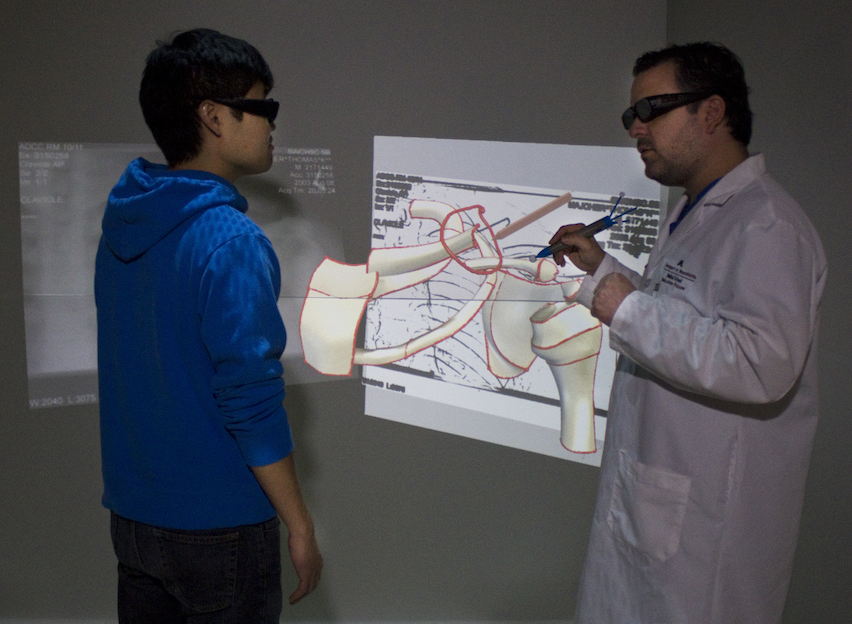
I worked on multiple projects to improve multimodal perception across Meta Reality Labs's device portfolio. This research answered several questions about how to effectively combine gaze (eye tracking) and hand tracking, EMG handwriting with microgestures, head tracking with touchpad gestures, and more. The resulting algorithms and study insights have been integrated into Orion AR and Meta VR Glasses and are shaping future product directions.
I worked closely with EMG sensing teams at Meta to explore, influence, and evaluate next-generation continuous control schemes for AI and AR glasses. Some of this work has been published in Nature and efforts to improve gesture robustness and expressiveness continue. Stay tuned for future product announcements from Meta!
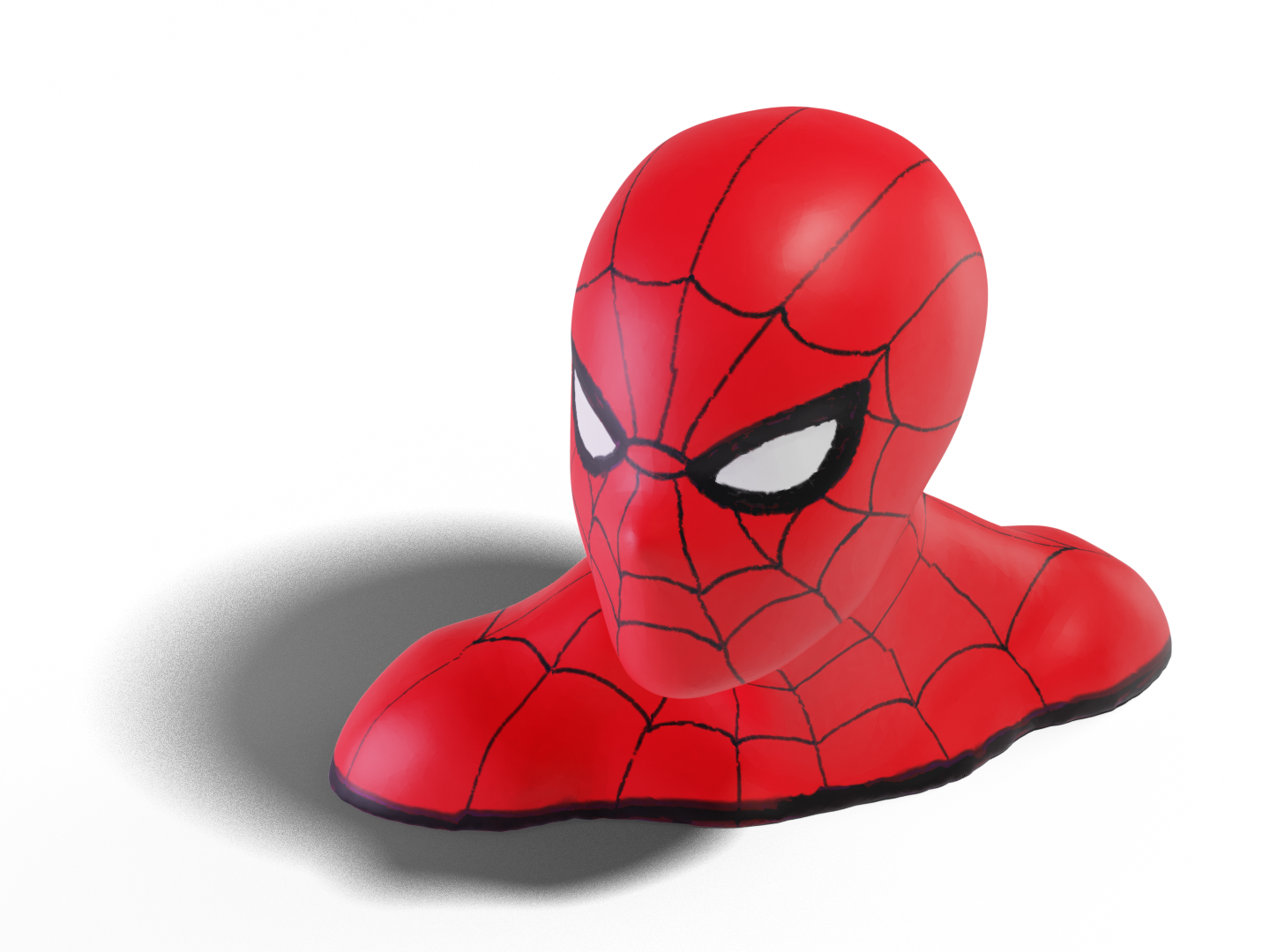
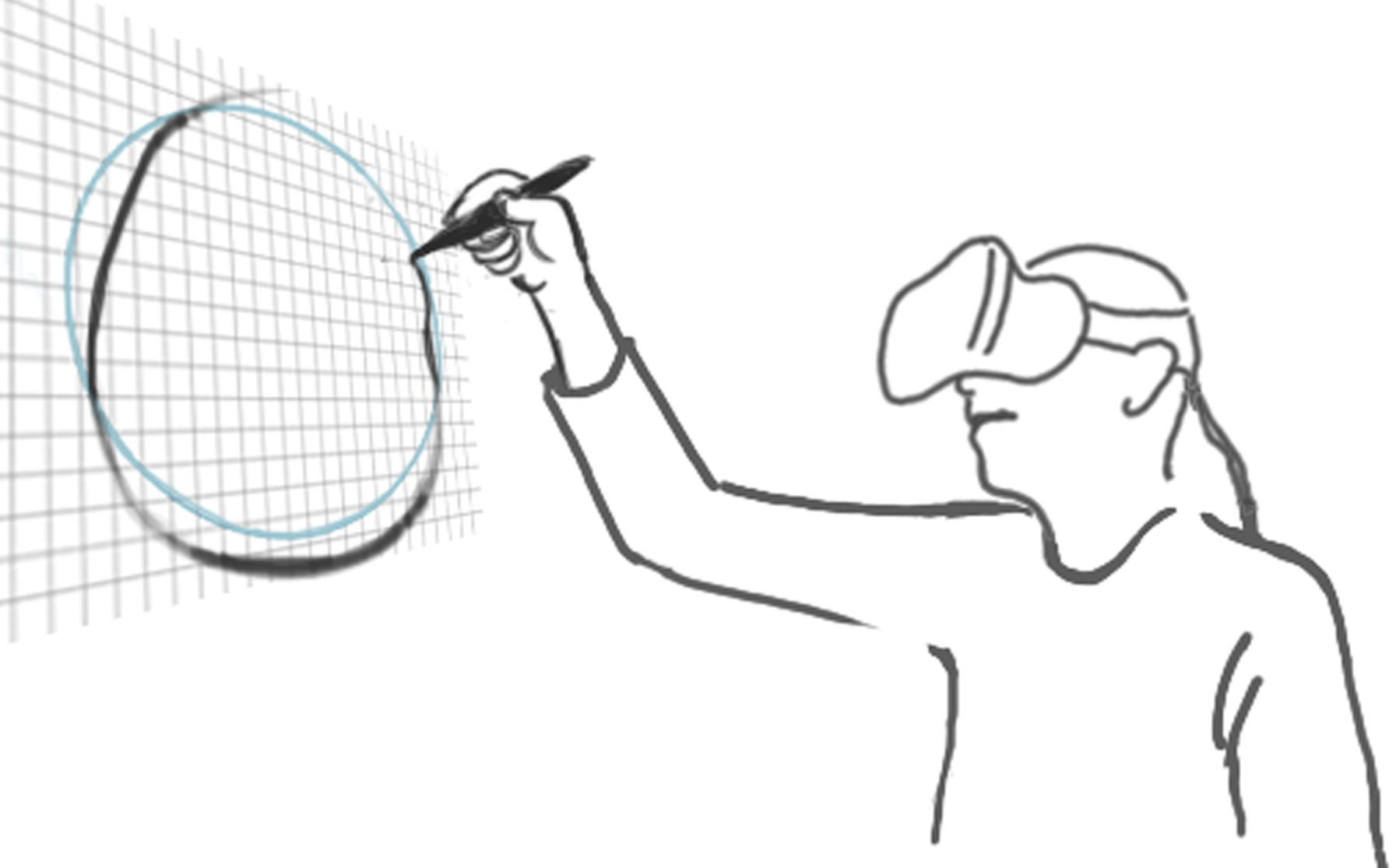
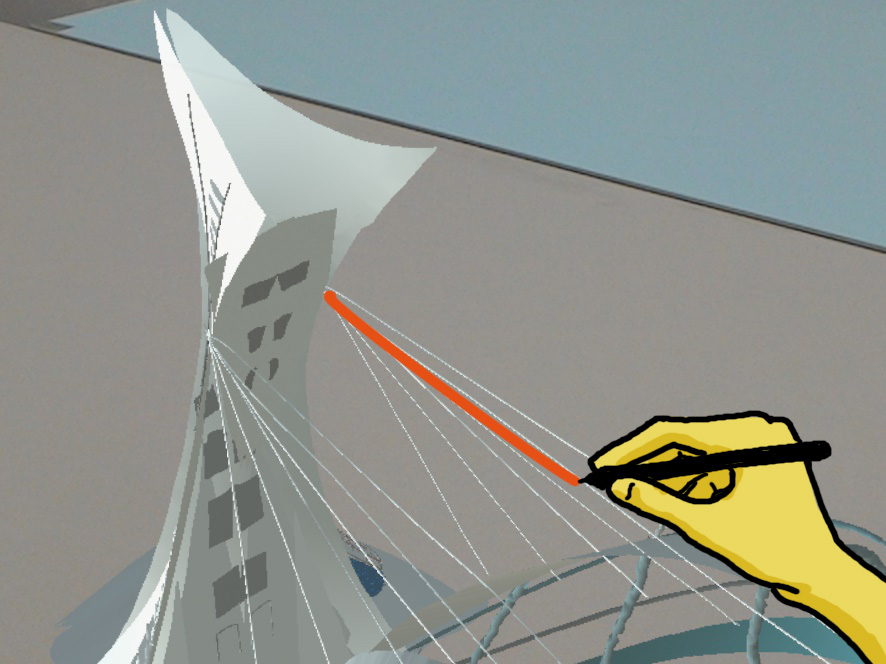
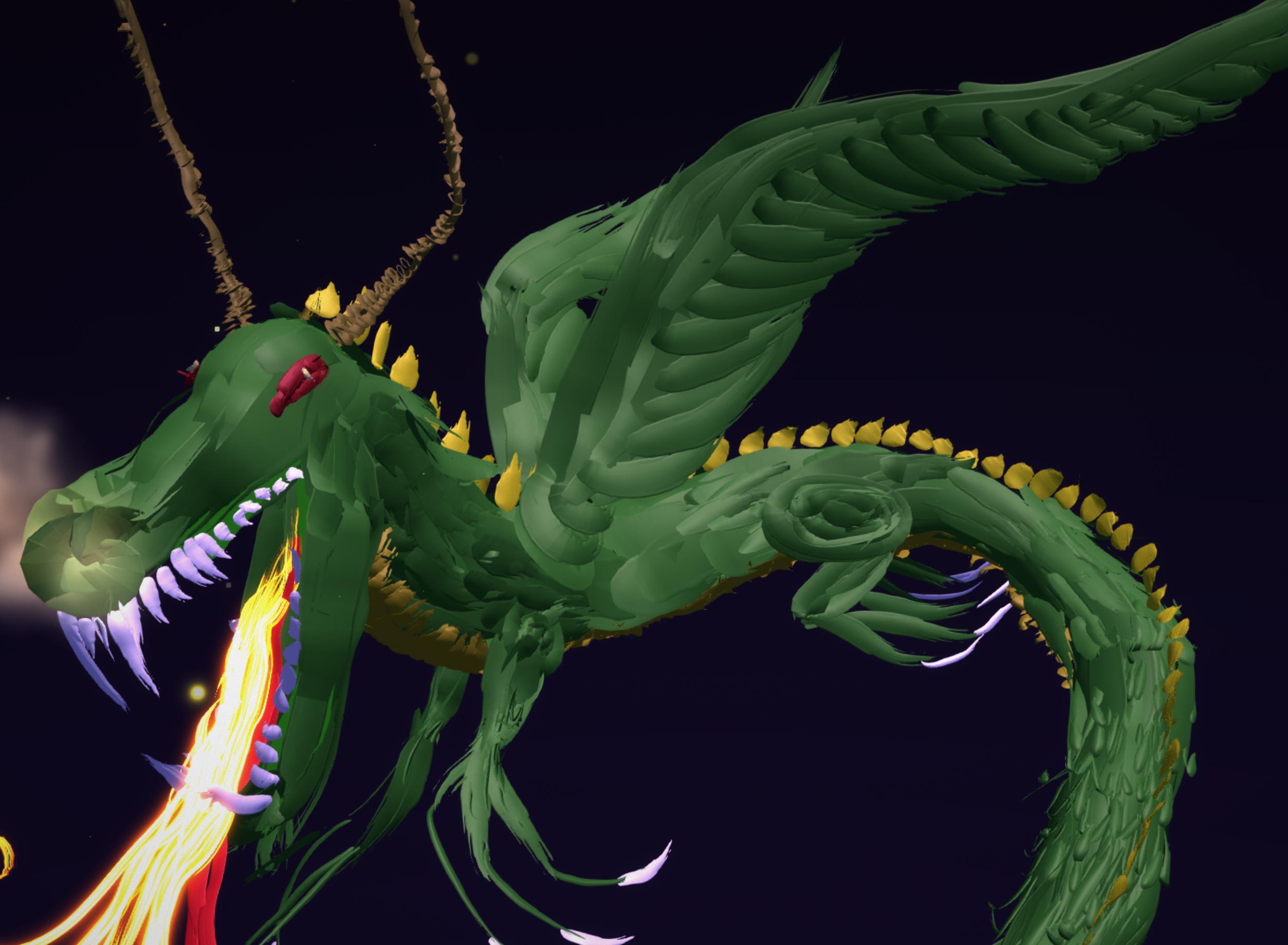
This multi-year project forms the core of my PhD research. It started with a set of studies characterizing mid-air 3D sketching. We then developed SymbiosisSketch, a hybrid tablet+AR tool for expressive 3D sketching. Finally, we built Mimicry, a novel algorithm for sketching curves on surfaces in VR. The first two papers have inspired many follow-up works in the HCI and graphics communities, and a Mimicry-like algorithm was later integrated into the surface sketching tool in Gravity Sketch.
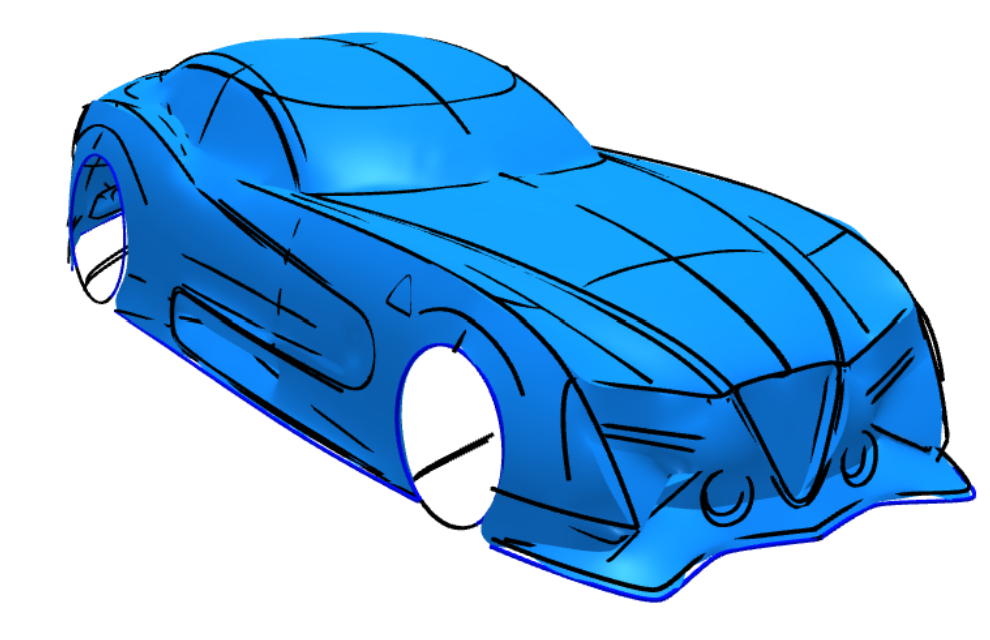
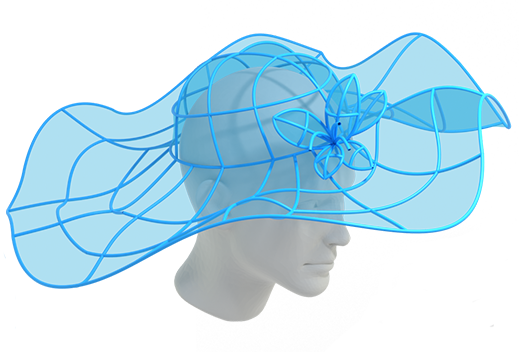
This project, led by Emilie Yu, produced two creative tools for creating 3D sketches and surfacing them. The first is an interactive tool called CASSIE for creating 3D sketches from scratch in VR and automatically surfacing them. The second is an offline algorithm for fitting high-quality piecewise-smooth surfaces to 3D sketches created using CASSIE, other VR tools, or desktop tools for 3D sketching.
In collaboration with Adobe Research, I elicited hand gestures for VR animation authoring and then built a gesture recognition system for animation authoring. The system supports performance-based and keyframed animation of rigid objects and demonstration of dynamic phenomena using particle systems.
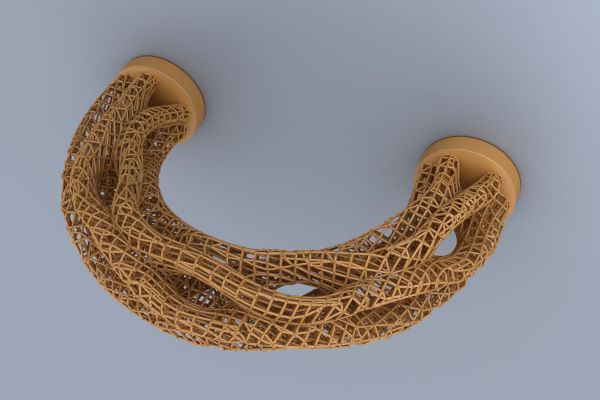
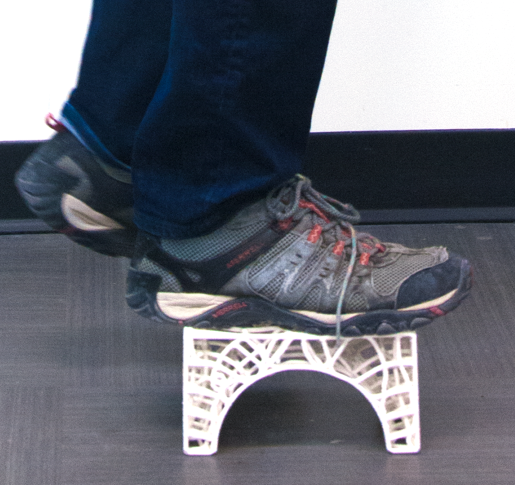
In this project, I collaborated with researchers at Adobe, MIT, and Reichman University to develop a new algorithm for generating volumetric Michell trusses. These trusses result in a lightweight structure for a given load and boundary conditions, and can be parametrically edited using industry-standard tools such as Autodesk Fusion. In addition to a technical paper and a poster presentation, this work was also exhibited at University of Toronto's Robarts Library.
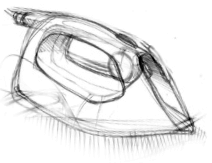
As part of my Master's thesis at IIT-Kanpur and Inria, I developed a system for exploring design variations by interpolating between multiple concept sketches. Concept sketches are early-stage design sketches that are rough and incomplete, which makes the interpolation task challenging.
A Generic Non-Invasive Neuromotor Interface for Human-Computer Interaction
Patrick Kaifosh, Thomas R. Reardon, and CTRL-Labs at Reality Labs (243 contributors including Rahul Arora) Nature 2025
Large-scale neuromotor interface work showing that surface EMG wearables can generalize across people and support practical, high-bandwidth interaction.
Since the advent of computing, humans have sought computer input technologies that are expressive, intuitive and universal. While diverse modalities have been developed, including keyboards, mice and touchscreens, they require interaction with a device that can be limiting, especially in on-the-go scenarios. Gesture-based systems use cameras or inertial sensors to avoid an intermediary device, but tend to perform well only for unobscured movements. By contrast, brain-computer or neuromotor interfaces that directly interface with the body's electrical signalling have been imagined to solve the interface problem1, but high-bandwidth communication has been demonstrated only using invasive interfaces with bespoke decoders designed for single individuals. Here, we describe the development of a generic non-invasive neuromotor interface that enables computer input decoded from surface electromyography (sEMG). We developed a highly sensitive, easily donned sEMG wristband and a scalable infrastructure for collecting training data from thousands of consenting participants. Together, these data enabled us to develop generic sEMG decoding models that generalize across people. Test users demonstrate a closed-loop median performance of gesture decoding of 0.66 target acquisitions per second in a continuous navigation task, 0.88 gesture detections per second in a discrete-gesture task and handwriting at 20.9 words per minute. We demonstrate that the decoding performance of handwriting models can be further improved by 16% by personalizing sEMG decoding models. To our knowledge, this is the first high-bandwidth neuromotor interface with performant out-of-the-box generalization across people.
@article{kaifosh2025generic,
	title={A Generic Non-Invasive Neuromotor Interface for Human-Computer Interaction},
	author={Patrick Kaifosh and Thomas R. Reardon and {CTRL-Labs at Reality Labs}},
	journal={Nature},
	numpages={36},
	year={2025},
	month = jul,
	url = {https://doi.org/10.1038/s41586-025-09255-w},
	doi = {10.1038/s41586-025-09255-w},
	publisher = {Springer Nature Limited},
	address = {New York, NY, USA}
}
Piecewise-Smooth Surface Fitting onto Unstructured 3D Sketches
Emilie Yu, Rahul Arora, J. Andreas Bærentzen, Karan Singh, and Adrien Bousseau ACM Transactions on Graphics (proc. SIGGRAPH) 2022
Transforms messy freehand 3D sketches into usable piecewise-smooth surfaces, making immersive sketching outputs more useful for downstream modeling.
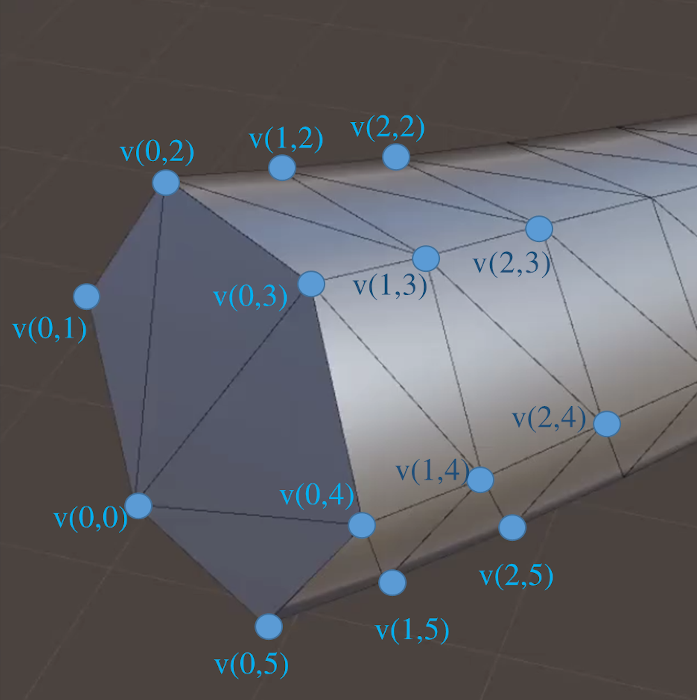
We propose a method to transform unstructured 3D sketches into piecewise smooth surfaces that preserve sketched geometric features. Immersive 3D drawing and sketch-based 3D modeling applications increasingly produce imperfect and unstructured collections of 3D strokes as design output. These 3D sketches are readily perceived as piecewise smooth surfaces by viewers, but are poorly handled by existing 3D surface techniques tailored to well- connected curve networks or sparse point sets. Our algorithm is aligned with human tendency to imagine the strokes as a small set of simple smooth surfaces joined along stroke boundaries. Starting with an initial proxy surface, we iteratively segment the surface into smooth patches joined sharply along some strokes, and optimize these patches to fit surrounding strokes. Our evaluation is fourfold: we demonstrate the impact of various algorithmic parameters, we evaluate our method on synthetic sketches with known ground truth surfaces, we compare to prior art, and we show compelling results on more than 50 designs from a diverse set of 3D sketch sources.
@article{yu2022piecewise,
	title={Piecewise-Smooth Surface Fitting onto Unstructured 3D Sketches},
	author={Yu, Emilie and Arora, Rahul and B\ae{}rentzen, J. Andreas and Singh, Karan and Bousseau, Adrien},
	year = {2022},
	issue_date = {July 2022},
	publisher = {Association for Computing Machinery},
	address = {New York, NY, USA},
	volume = {41},
	number = {4},
	issn = {0730-0301},
	journal = {ACM Trans. Graph.},
	month = {jul},
	articleno = {88},
	numpages = {16},
	url = {https://doi.org/10.1145/3528223.3530100},
	doi = {10.1145/3528223.3530100},
}
Mid-Air Drawing of Curves on 3D Surfaces in Virtual Reality
Rahul Arora and Karan Singh ACM Transactions on Graphics (TOG), presented at SIGGRAPH 2021
Design and evaluation of techniques that let people comfortably draw complex strokes onto 3D surfaces directly in VR.
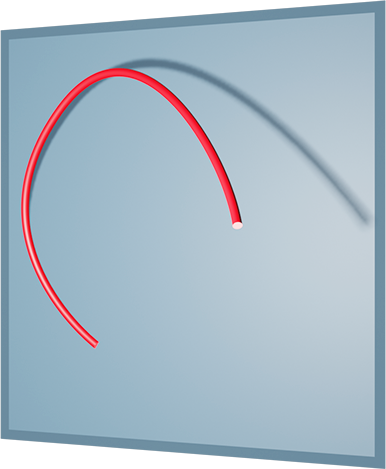
Complex 3D curves can be created by directly drawing mid-air in immersive environments (Augmented and Virtual Realities). Drawing mid-air strokes precisely on the surface of a 3D virtual object, however, is difficult; necessitating a projection of the mid-air stroke onto the user “intended” surface curve. We present the first detailed investigation of the fundamental problem of 3D stroke projection in VR. An assessment of the design requirements of real-time drawing of curves on 3D objects in VR is followed by the definition and classification of multiple techniques for 3D stroke projection. We analyze the advantages and shortcomings of these approaches both theoretically and via practical pilot testing. We then formally evaluate the two most promising techniques spraycan and mimicry with 20 users in VR. The study shows a strong qualitative and quantitative user preference for our novel stroke mimicry projection algorithm. We further illustrate the effectiveness and utility of stroke mimicry, to draw complex 3D curves on surfaces for various artistic and functional design applications.
@article{arora2021midair,
	title={Mid-Air Drawing of Curves on {3D} Surfaces in Virtual Reality},
	author={Rahul Arora and Karan Singh},
	journal={ACM Trans. Graph.},
	volume={40},
	number={3},
	numpages={17},
	year={2021},
	month = jul,
	url = {http://doi.org/10.1145/1122445.1122456},
	doi = {10.1145/1122445.1122456},
	publisher = {Association for Computing Machinery},
	address = {New York, NY, USA}
}
CASSIE: Curve and Surface Sketching in Immersive Environments
Emilie Yu, Rahul Arora, Tibor Stanko, J. Andreas Bærentzen, Karan Singh, and Adrien Bousseau ACM SIGCHI Conference on Human Factors in Computing Systems (CHI) 2021 Best Paper Honorable Mention
VR conceptual modelling system that creates connected and surfaced curve-networks in real time from mid-air 3D strokes.
We present CASSIE, a conceptual modeling system in VR that leverages freehand mid-air sketching, and a novel 3D optimization framework to create connected curve network armatures, predictively surfaced using patches with C0 continuity. Our system provides a judicious balance of interactivity and automation, providing a homogeneous 3D drawing interface for a mix of freehand curves, curve networks, and surface patches. Our system encourages and aids users in drawing consistent networks of curves, easing the transition from freehand ideation to concept modeling. A comprehensive user study with professional designers as well as amateurs (N=12), and a diverse gallery of 3D models, show our armature and patch functionality to offer a user experience and expressivity on par with freehand ideation, while creating sophisticated concept models for downstream applications.
@inproceedings{yu2021cassie,
	author = {Yu, Emilie and Arora, Rahul and Stanko, Tibor and Bærentzen, J. Andreas and Singh, Karan and Bousseau, Adrien},
	title = { {CASSIE}: {Curve} and Surface Sketching in Immersive Environments},
	booktitle = {Proceedings of the 2021 CHI Conference on Human Factors in Computing Systems},
	series = {CHI '21},
	year = {2021},
	location = {Yokohoma, Japan},
	publisher = {Association for Computing Machinery},
	address = {New York, NY, USA},
	doi = {10.1145/3411764.3445158},
	url = {http://dx.doi.org/10.1145/3411764.3445158},
	pages = {1–14},
	numpages = {14},
	keywords = {curve networks, immersive design, ideation, concept modeling},
	series = {CHI '21}
}
MagicalHands: Mid-Air Hand Gestures for Animating in VR
Rahul Arora, Rubaiat Habib Kazi, Danny Kaufman, Wilmot Li, and Karan Singh Proceedings of the 32nd Annual ACM Symposium on User Interface and Software Technology (UIST) 2019
Gesture elicitation and prototype system for authoring animation effects in VR using bare-handed input.
We explore the use of hand gestures for authoring animations in virtual reality (VR). We first perform a gesture elicitation study to understand user preferences for a spatiotemporal, bare-handed interaction system in VR. Specifically, we focus on creating and editing dynamic, physical phenomena (e.g., particle systems, deformations, coupling), where the mapping from gestures to animation is ambiguous and indirect. We present commonly observed mid-air gestures from the study that cover a wide range of interaction techniques, from direct manipulation to abstract demonstrations. To this end, we extend existing gesture taxonomies to the rich spatiotemporal interaction space of the target domain and distill our findings into a set of guidelines that inform the design of natural user interfaces for VR animation. Finally, based on our guidelines, we develop a proof-of-concept gesture-based VR animation system, MagicalHands.
@inproceedings{arora2019magicalhands,
	author = {Arora, Rahul and Kazi, Rubaiat Habib and Kaufman, Danny and Li, Wilmot and Singh, Karan},
	title = { {MagicalHands}: Mid-Air Hand Gestures for Animating in {VR}},
	booktitle = {Proceedings of the 32nd Annual ACM Symposium on User Interface Software and Technology},
	series = {UIST '19},
	year = {2019},
	location = {New Orleans, LA, USA},
	numpages = {12},
	isbn = {9781450368162},
	publisher = {Association for Computing Machinery},
	address = {New York, NY, USA},
	keywords = {gestures, virtual reality, animation}
}
Volumetric Michell Trusses for Parametric Design & Fabrication
Rahul Arora, Alec Jacobson, Timothy R. Langlois, Yijiang Huang, Caitlin Mueller, Wojciech Matusik, Ariel Shamir, Karan Singh, and David I.W. Levin Proceedings of the 3rd ACM Symposium on Computation Fabrication (SCF) 2019 Winner of U of T Libraries Graduate Student Exhibition Competition
An algorithm for designing structurally sound, parametrically editable volumetric truss structures for fabrication workflows.
We present the first algorithm for designing volumetric Michell Trusses. Our method uses a parametrization-based approach to generate trusses made of structural elements aligned with the primary direction of an object’s stress field. Such trusses exhibit high strength-to-weight ratio while also being parametrically editable which can be easily integrated with parametric editing tools such as Autodesk Fusion. We show a number of examples that demonstrate that the output of our algorithm produces truss structures that are aligned with an object’s underlying stress tensor field, are structurally sound and that their global parametrization facilitates the creation of unique structures in a number of domains.
@inproceedings{arora2019volumetric,
	author = {Arora, Rahul and Jacobson, Alec and Langlois, Timothy R. and Huang, Yijiang and Mueller, Caitlin and Matusik, Wojciech and Shamir, Ariel and Singh, Karan and Levin, David I. W.},
	title = {Volumetric {Michell} Trusses for Parametric Design \& Fabrication},
	year = {2019},
	isbn = {9781450367950},
	publisher = {Association for Computing Machinery},
	address = {New York, NY, USA},
	url = {https://doi.org/10.1145/3328939.3328999},
	doi = {10.1145/3328939.3328999},
	booktitle = {Proceedings of the ACM Symposium on Computational Fabrication},
	articleno = {6},
	numpages = {13},
	keywords = {topology optimization, simulation, design, curve networks},
	location = {Pittsburgh, Pennsylvania},
	series = {SCF '19}
}
SymbiosisSketch: Combining 2D and 3D Sketching for Designing Detailed 3D Objects in Situ
Rahul Arora, Rubaiat Habib, Tovi Grossman, George Fitzmaurice, and Karan Singh Proceedings of the ACM SIGCHI Conference on Human Factors in Computing Systems (CHI) 2018
A design system combining immersive 3D sketching with precise 2D tablet input for creating detailed virtual objects in-situ in a physical environment.
We present SymbiosisSketch, a hybrid sketching system that combines drawing in air (3D) and on a drawing surface (2D) to create detailed 3D designs of arbitrary scale in an augmented reality (AR) setting. SymbiosisSketch leverages the complementary affordances of 3D (immersive, unconstrained, life-sized) and 2D (precise, constrained, ergonomic) interactions for in situ 3D conceptual design. A defining aspect of our system is the ongoing creation of surfaces from unorganized collections of 3D curves. These surfaces serve a dual purpose: as 3D canvases to map strokes drawn on a 2D tablet, and as shape proxies to occlude the physical environment and hidden curves in a 3D sketch. SymbiosisSketch users draw interchangeably on a 2D tablet or in 3D within an ergonomically comfortable canonical volume, mapped to arbitrary scale in AR. Our evaluation study shows this hybrid technique to be easy to use in situ and effective in transcending the creative potential of either traditional sketching or drawing in air.
@inproceedings{arora2018symbiosissketch,
	author = {Arora, Rahul and Kazi, Rubaiat Habib and Grossman, Tovi and Fitzmaurice, George and Singh, Karan},
	title = { {SymbiosisSketch}: {Combining} {2D} \& {3D} Sketching for Designing Detailed {3D} Objects in Situ},
	year = {2018},
	isbn = {9781450356206},
	publisher = {Association for Computing Machinery},
	address = {New York, NY, USA},
	url = {http://dx.doi.org/10.1145/3173574.3173759},
	doi = {10.1145/3173574.3173759},
	booktitle = {Proceedings of the 2018 CHI Conference on Human Factors in Computing Systems},
	pages = {1–15},
	numpages = {15},
	keywords = {3d drawing, design sketching, augmented reality},
	location = {Montreal QC, Canada},
	series = {CHI '18}
}
Experimental Evaluation of Sketching on Surfaces in VR
Rahul Arora, Rubaiat Habib, Fraser Anderson, Tovi Grossman, Karan Singh, and George Fitzmaurice Proceedings of the ACM SIGCHI Conference on Human Factors in Computing Systems (CHI) 2017
Controlled studies identifying why accurate sketching is hard in VR and what guidance techniques help or hurt user performance.
Sketching in immersive 3D virtual reality (VR) environments has great potential for a variety of interactive 3D design applications. Precisely sketching the intended strokes in mid-air, however, can be a challenge. In this paper, we present a set of controlled studies to analyze the factors affecting human ability to sketch freely in a 3D VR environment. In our first study, we directly compare traditional sketching on a physical surface to sketching in VR, with and without a physical surface to rest the stylus on. Our results indicate that the lack of a physical drawing surface is a major cause of inaccuracies in VR drawing, and that the effect is dependent on the orientation of the drawing surface. In a second experiment, we evaluate the extent to which visual guidance can compensate for the loss of sketching precision in VR. We found that while additional visual guidance improves positional accuracy, it can be detrimental to the aesthetic quality of strokes. We conclude by distilling our experimental findings into design guidelines for sketching tools in immersive 3D environments.
@inproceedings{Arora:vrSketching:2017,
	author = {Arora, Rahul and Kazi, Rubaiat Habib and Anderson, Fraser and Grossman, Tovi and Singh, Karan and Fitzmaurice, George},
	title = {Experimental Evaluation of Sketching on Surfaces in {VR}},
	year = {2017},
	isbn = {9781450346559},
	publisher = {Association for Computing Machinery},
	address = {New York, NY, USA},
	url = {https://doi.org/10.1145/3025453.3025474},
	doi = {10.1145/3025453.3025474},
	booktitle = {Proceedings of the 2017 CHI Conference on Human Factors in Computing Systems},
	pages = {5643–5654},
	numpages = {12},
	keywords = {visual factors, virtual reality, 3d drawing, motor ability},
	location = {Denver, Colorado, USA},
	series = {CHI '17}
}
SketchSoup: Exploratory Ideation using Design Sketching
Rahul Arora, Ishan Darolia, Vinay P. Namboodiri, Karan Singh, and Adrien Bousseau Computer Graphics Forum (CGF), presented at Eurographics 2017
An interpolation workflow for early-stage design exploration, enabling the investigation of shape and viewpoint alternatives before committing to more resource-intensive modeling steps.
A hallmark of early stage design is a number of quick-and-dirty sketches capturing design inspirations, model variations, and alternate viewpoints of a visual concept. We present SketchSoup, a workflow that allows designers to explore the design space induced by such sketches. We take an unstructured collection of drawings as input, along with a small number of user-provided correspondences as input. We register them using a multi-image matching algorithm, and present them as a 2D interpolation space. By morphing sketches in this space, our approach produces plausible visualizations of shape and viewpoint variations despite the presence of sketch distortions that would prevent standard camera calibration and 3D reconstruction. In addition, our interpolated sketches can serve as inspiration for further drawings, which feed back into the design space as additional image inputs. SketchSoup thus fills a significant gap in the early ideation stage of conceptual design by allowing designers to make better informed choices before proceeding to more expensive 3D modeling and prototyping. From a technical standpoint, we describe an end-to-end system that judiciously combines and adapts various image processing techniques to the drawing domain—where the images are dominated not by color, shading and texture, but by sketchy stroke contours.
@article{Arora:SketchSoup:2017,
	author = {Arora, Rahul and Darolia Ishan and Namboodiri, Vinay P. and Singh, Karan and Bousseau, Adrien},
	title = { {SketchSoup}: Exploratory Ideation using Design Sketches},
	journal = {Computer Graphics Forum},
	year = {2017},
	url = {http://dx.doi.org/10.1111/cgf.13081},
	doi = {10.1111/cgf.13081},
	publisher = {Wiley},
	volume = {36},
	number = {8},
	pages = {302-312},
	keywords = {paint systems, shape blending/morphing, non-photorealistic rendering},
}
Derandomizing Isolation Lemma for K3,3-free and K5-free Bipartite Graphs
Rahul Arora, Ashu Gupta, Rohit Gurjar, and Raghunath Tewari Symposium on Theoretical Aspects of Computer Science (STACS) 2016
Complexity-theory work on the perfect matching problem for certain classes of non-planar graphs.
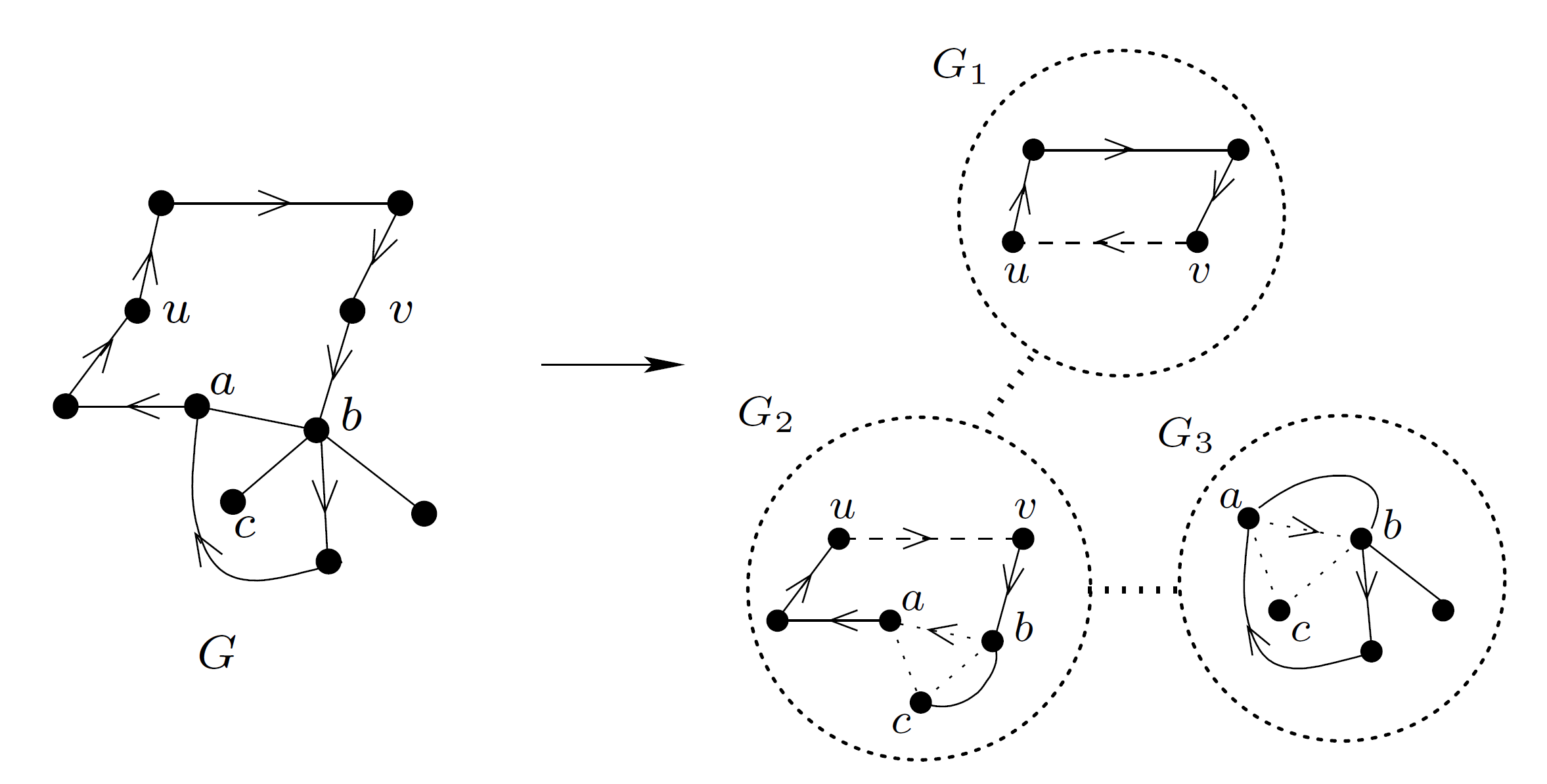
The perfect matching problem has a randomized NC algorithm, using the celebrated Isolation Lemma of Mulmuley, Vazirani and Vazirani. The Isolation Lemma states that giving a random weight assignment to the edges of a graph ensures that it has a unique minimum weight perfect matching, with a good probability. We derandomize this lemma for K3,3-free and K5-free bipartite graphs. That is, we give a deterministic log-space construction of such a weight assignment for these graphs. Such a construction was known previously for planar bipartite graphs. Our result implies that the perfect matching problem for K3,3-free and K5-free bipartite graphs is in SPL. It also gives an alternate proof for an already known result—reachability for K3,3-free and K5-free graphs is in UL.
@inproceedings{arora2016derandomizing,
	author = {Rahul Arora and Ashu Gupta and Rohit Gurjar and Raghunath Tewari},
	title = {Derandomizing Isolation Lemma for {K3,3-free} and {K5-free} Bipartite Graphs},
	booktitle = {33rd Symposium on Theoretical Aspects of Computer Science (STACS 2016)},
	pages = {10:1--10:15},
	series = {Leibniz International Proceedings in Informatics (LIPIcs)},
	ISBN = {978-3-95977-001-9},
	ISSN = {1868-8969},
	year = {2016},
	volume = {47},
	editor = {Nicolas Ollinger and Heribert Vollmer},
	publisher = {Schloss Dagstuhl--Leibniz-Zentrum fuer Informatik},
	address = {Dagstuhl, Germany},
	URL = {http://drops.dagstuhl.de/opus/volltexte/2016/5711},
	URN = {urn:nbn:de:0030-drops-57116},
	doi = {10.4230/LIPIcs.STACS.2016.10},
	keywords = {bipartite matching, derandomization, isolation lemma, SPL, minor-free graph}
}
Other Publications (Posters, Preprints, Book Chapters, etc.)
Introduction to 3D Sketching
Rahul Arora, Mayra Donaji Barrera Machuca, Philipp Wacker, Daniel Keefe, and Johann Habakuk Israel Interactive Sketch-Based Interfaces and Modelling for Design (Book Chapter) 2023
Introductory chapter tracing the history of 3D sketching and the unique opportunities and challenges it presents.
@incollection{arora2023introduction,
  title={Introduction to {3D} sketching},
  author={Arora, Rahul and Machuca, Mayra Donaji Barrera and Wacker, Philipp and Keefe, Daniel and Israel, Johann Habakuk},
  booktitle={Interactive Sketch-based Interfaces and Modelling for Design},
  pages={151--177},
  year={2023},
  publisher={River Publishers},
  doi={10.1201/9781003360650-8}
}
Input Processing and Geometric Representations for 3D Sketches
Johann Habakuk Israel, Mayra Donaji Barrera Machuca, Rahul Arora, Philipp Wacker, and Daniel Keefe Interactive Sketch-Based Interfaces and Modelling for Design (Book Chapter) 2023
Chapter describing how user inputs are converted to appropriate geometric representations for rendering and downstream modelling tasks.
@incollection{israel2023input,
  title={Input Processing and Geometric Representations for {3D} Sketches},
  author={Israel, Johann Habakuk and Machuca, Mayra Donaji Barrera and Arora, Rahul and Wacker, Philipp and Keefe, Daniel},
  booktitle={Interactive Sketch-based Interfaces and Modelling for Design},
  pages={179--193},
  year={2023},
  publisher={River Publishers},
  doi={10.1201/9781003360650-9}
}
Interaction Devices and Techniques for 3D Sketching
Mayra Donaji Barrera Machuca, Rahul Arora, Philipp Wacker, Daniel Keefe, and Johann Habakuk Israel Interactive Sketch-Based Interfaces and Modelling for Design (Book Chapter) 2023
A thorough survey of devices and interaction techniques for 3D sketching, including recent developments.
@incollection{machuca2023interaction,
  title={Interaction Devices and Techniques for {3D} Sketching},
  author={Machuca, Mayra Donaji Barrera and Arora, Rahul and Wacker, Philipp and Keefe, Daniel and Israel, Johann Habakuk},
  booktitle={Interactive Sketch-based Interfaces and Modelling for Design},
  pages={195--239},
  year={2023},
  publisher={River Publishers},
  doi={10.1201/9781003360650-10}
}
3D Sketching Application Scenarios
Philipp Wacker, Mayra Donaji Barrera Machuca, Rahul Arora, Daniel Keefe, and Johann Habakuk Israel Interactive Sketch-Based Interfaces and Modelling for Design (Book Chapter) 2023
Survey chapter outlining where 3D sketching workflows create value across design, creativity, and scientific visualization.
@incollection{wacker20233d,
  title={ {3D} Sketching Application Scenarios},
  author={Wacker, Philipp and Arora, Rahul and Machuca, Mayra Donaji Barrera and Keefe, Daniel and Israel, Johann Habakuk},
  booktitle={Interactive Sketch-based Interfaces and Modelling for Design},
  pages={241--261},
  year={2023},
  publisher={River Publishers}
}
Thinking Outside the Lab: VR Size & Depth Perception in the Wild
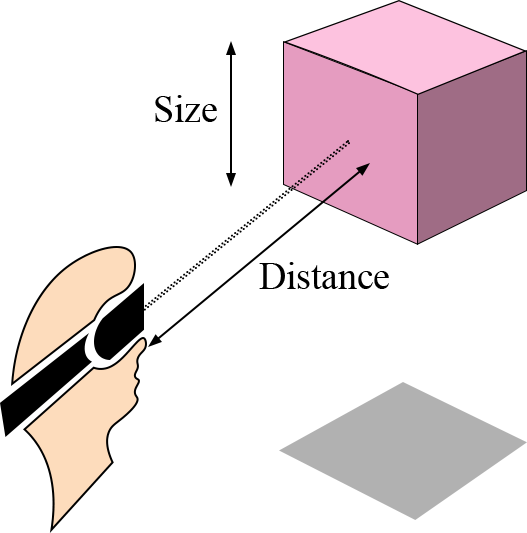
Remote VR perception study on size and depth perception that shows how to run perceptual experiments with a larger, more diverse participant sample than is possible in a lab.
Size and distance perception in Virtual Reality (VR) have been widely studied, albeit in a controlled laboratory setting with a small number of participants. We describe a fully remote perceptual study with a gamified protocol to encourage participant engagement, which allowed us to quickly collect high-quality data from a large, diverse participant pool (N=60). Our study aims to understand medium-field size and egocentric distance perception in real-world usage of consumer VR devices. We utilized two perceptual matching tasks—distance bisection and size matching—at the same target distances of 1–9 metres. While the bisection protocol indicated a near-universal trend of nonlinear distance compression, the size matching estimates were more equivocal. Varying eye-height from the floor plane showed no significant effect on the judgements. We also discuss the pros and cons of a fully remote perceptual study in VR, the impact of hardware variation, and measures needed to ensure high-quality data.
@misc{arora2021thinking,
      title={Thinking Outside the Lab: {VR} Size \& Depth Perception in the Wild},
      author={Arora, Rahul and Li, Jiannan and Shi, Gongyi and Singh, Karan},
      year={2021},
      eprint={2105.00584},
      archivePrefix={arXiv},
      primaryClass={cs.HC}
}
Creative Expression with Immersive 3D Interactions
Rahul Arora CHI '20 Extended Abstracts (Doctoral Consortia) 2020
Doctoral consortium paper framing immersive creative tools as a research program grounded in both user studies and technical systems work.
Virtual and augmented realities (VR/AR) allow artists to create 3D content in a three-dimensional space---both display and inputs are 3D. Getting rid of 2D proxies such as screens and graphic tablets removes a significant barrier from 3D creation and allows artists to create more intuitively, and potentially more efficiently. However, creating in VR/AR introduces new control, precision, and ergonomic challenges. Designing interactive tools for 3D creation is therefore non-trivial. A deep understanding of human factors, user preferences, as well as biases stemming from users' experience with 2D tools is essential to develop effective creative tools for VR/AR. My research combines exploratory user studies and technical advancements to build novel tools for creating 3D content in immersive spaces. I present two computer graphics applications which utilize 3D interactions to improve existing creative workflows and devise novel ones for visual creative expression in three-dimensions. The first studies concept sketching, while the second explores animation of dynamic physical phenomena. I then describe my ongoing work and planned future work on other creative applications.
@inproceedings{arora2020creative,
	author = {Arora, Rahul},
	title = {Creative Expression with Immersive {3D} Interactions},
	booktitle = {Extended Abstracts of the 2020 CHI Conference on Human Factors in Computing Systems},
	series = {CHI EA '20},
	year = {2020},
	isbn = {9781450368193},
	location = {Honolulu, HI, USA},
	numpages = {8},
	url = {https://doi.org/10.1145/3334480.3375028},
	doi = {10.1145/3334480.3375028},
	publisher = {Association for Computing Machinery},
	address = {New York, NY, USA},
	keywords = {immersive reality, virtual and augmented realities, 3D interaction, creative tools},
}
Designing Volumetric Truss Structures for Computational Fabrication
Rahul Arora, Alec Jacobson, Timothy R. Langlois, Karan Singh, and David I.W. Levin In Graphics Interface (GI '18) Posters 2018
Poster describing the initial version of the Michell truss work.
We present the first algorithm for designing volumetric Michell Trusses. Our method uses a parametrization approach to generate trusses made of structural elements aligned with the primary direction of an objects stress field. Such trusses exhibit high strength-to-weight ratio while also being aesthetically pleasing. Unlike traditional approaches to structural optimization, our method produces trusses that can be edited as a post process but retain structural optimality. We also demonstrate the structural robustness of our designs via mechanical testing. Our algorithm permits an exciting combination of control and structural soundness which we believe serves as an important compliment to existing structural optimization tools and as a novel standalone design tool itself.
@inproceedings{arora2018designing,
	author = {Arora, Rahul and Jacobson, Alec and Langlois, Timothy R. and Singh, Karan and Levin, David I.W.},
	title = {Designing Volumetric Truss Structures for Computational Fabrication},
	booktitle = {In Graphics Interface 2018 Posters},
	series = {GI '18 Posters},
	year = {2018},
	location = {Toronto, Ontario, Canada},
	numpages = {2},
	publisher = {Canadian Human-Computer Communications Society},
	address = {New York, NY, USA}
}
Theses
Creative Visual Expression in Immersive 3D Environments
Recent developments in immersive technologies of virtual and augmented realities (VR/AR) have opened up the immersive space for 3D creation. By removing the crutch of two-dimensional proxies for input and output, the immersive medium presents a significant advance in the design of intuitive interfaces for 3D creative expression. However, immersion also presents its own unique challenges in precision, control, ergonomics, and perception. This thesis advocates for a human-centred approach to the design of creative tools for immersive environments. Conducting interviews, observational studies, and formal quantitative experiments reveals insights into the needs and aspirations of future users of immersive tools. These user studies build fundamental knowledge about the limitations of human perception and our musculoskeletal system. These insights are then utilized to build concrete design guidelines for immersive creation tools. We present four immersive tools, targeted at sketching, modelling, and animation tasks in VR/AR. These tools harness 3D mid-air interactions to improve the user experience for existing design tasks, and to enable novel design aesthetics.
@phdthesis{arora21creative,
	author = {Arora, Rahul},
	title = {Creative Visual Expression in Immersive {3D} Environments},
	school = {University of Toronto},
	year = {2021}
}
Exploring Design Space by Interpolating Between Multiple Sketches
Designers start product design process by drawing various quick and imperfect sketches. In this process, they represent the target concept via multiple shapes and geometric perspectives. We present a sketch-based rendering method and a tool built on top of it to help designers explore the design space induced by sketches of a single concept. Our tool allows a designer to visualize novel sketches by mixing and matching between the geometric and visual properties of multiple sketches. The method relies on an iterative algorithm to match and warp between sketches using minimal user interaction. We modify known techniques for image matching, warping and morphing to adapt to the unique challenges posed by sketchy inputs, and combine them to allow quick navigation of the design space of sketches. Our tool tries to fill a gap in the initial stage of the product design pipeline, allowing designers and their patrons to make better informed choices before proceeding to the time-consuming and expensive parts of the pipeline involving CAD, 3D design and rendering and/or 3D printing.
@mastersthesis{arora15exploring,
	author = {Arora, Rahul},
	title = {Exploring Design Space by Interpolating Between Multiple Sketches},
	school = {Indian Institute of Technology (IIT) Kanpur},
	year = {2015}
}
Beyond Work
Beyond my research work, I like to stay active, cook, drink great coffee, read, and create art.
Staying Active: I like hiking, biking, badminton, squash, and table tennis. I also tolerate lifting for the sake of my health.
Coffee: I love filter coffees brewed with a fruity, light roast but I experiment with all sorts of beans and brewing techniques. My favourite cafes and coffee roasters: Google Maps List.
Reading: I enjoy science fiction, historical fiction, political and scientific non-fiction, and graphic novels. My five-star list: The StoryGraph.
Art: I enjoy watercolour, life drawing, pen & markers, and digital art. I have uploaded and categorized my work here: Artwork.
Featured Artwork
A selection across watercolours, pens and markers, life drawing, digital work, pencil and charcoal, and miscellaneous pieces.